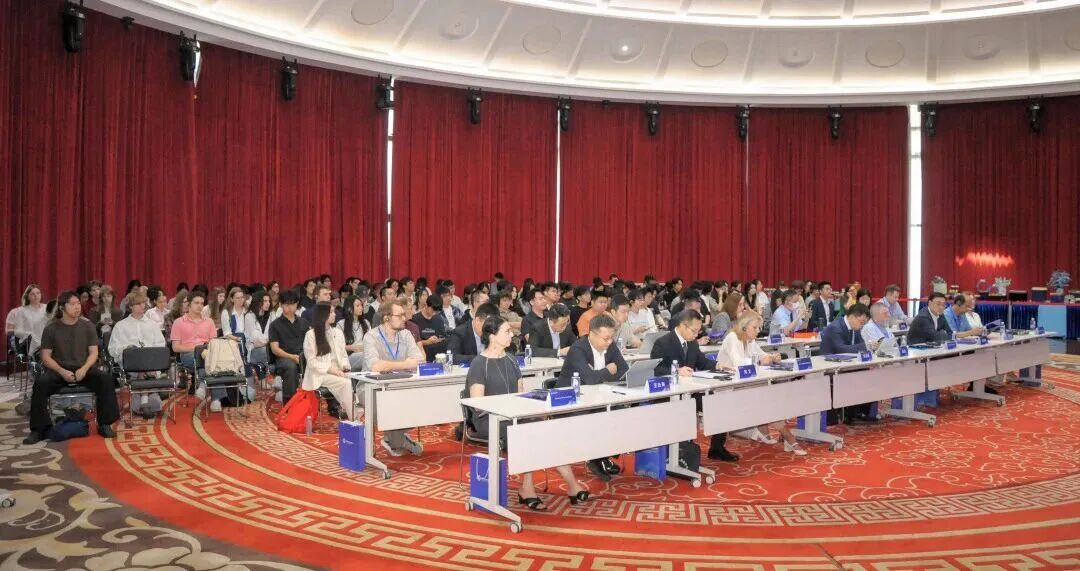
Recently, the keynote forum on “Digitalization and Artificial Intelligence Empowering Governance Modernization,” part of the Fifth Knowledge, Science and Culture Festival, was held at Shenzhen MSU-BIT University. The forum was jointly organized by our school and the Department of Management at Shenzhen MSU-BIT University. Experts, scholars, and representatives from universities and research institutions in China and Russia, including Moscow State University, the Office of the Presidential Commissioner for Children's Rights of the Russian Federation, the Chinese Academy of Social Sciences, the University of Chinese Academy of Sciences, the University of International Business and Economics, and Shenzhen University, gathered to discuss topics related to “Future Industries and Future Governance,” including how artificial intelligence is reshaping national governance, the capabilities and limitations of intelligent technologies, and university transformation and talent cultivation in the digital and intelligent era.
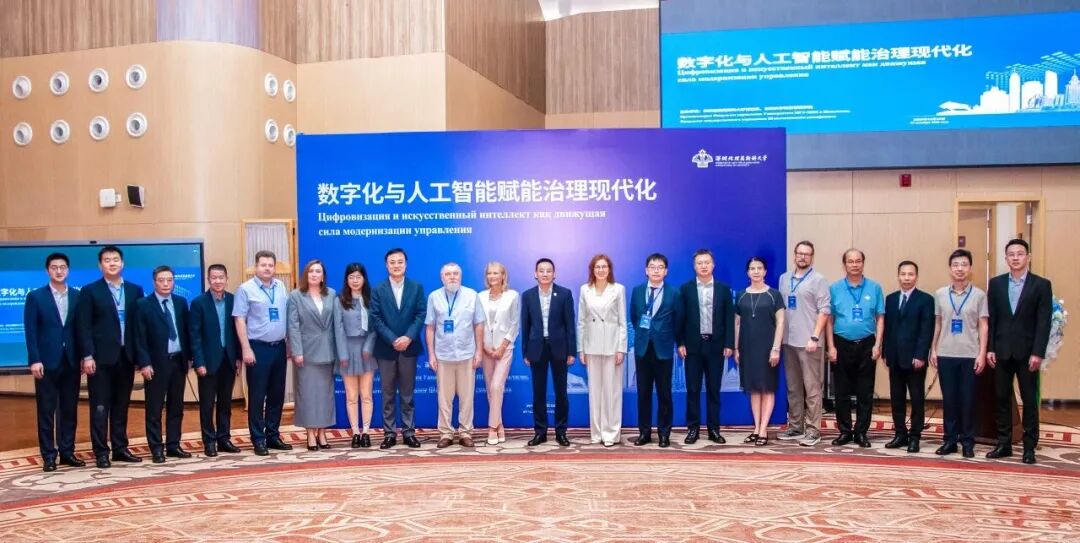
Chen Chaofeng, Deputy Secretary of the Party Committee and Secretary of the Commission for Discipline Inspection of Shenzhen MSU-BIT University; Professor Zhang Shuhua, President of the Chinese Political Science Association, Director of the Institute of Political Science at the Chinese Academy of Social Sciences, and Dean of the School of Government; Professor Chen Wen, Executive Dean of our school; and Professor Marianna Valeryevna Kudina, Deputy Dean of the School of Public Administration at Lomonosov Moscow State University, attended the opening ceremony and delivered speeches.
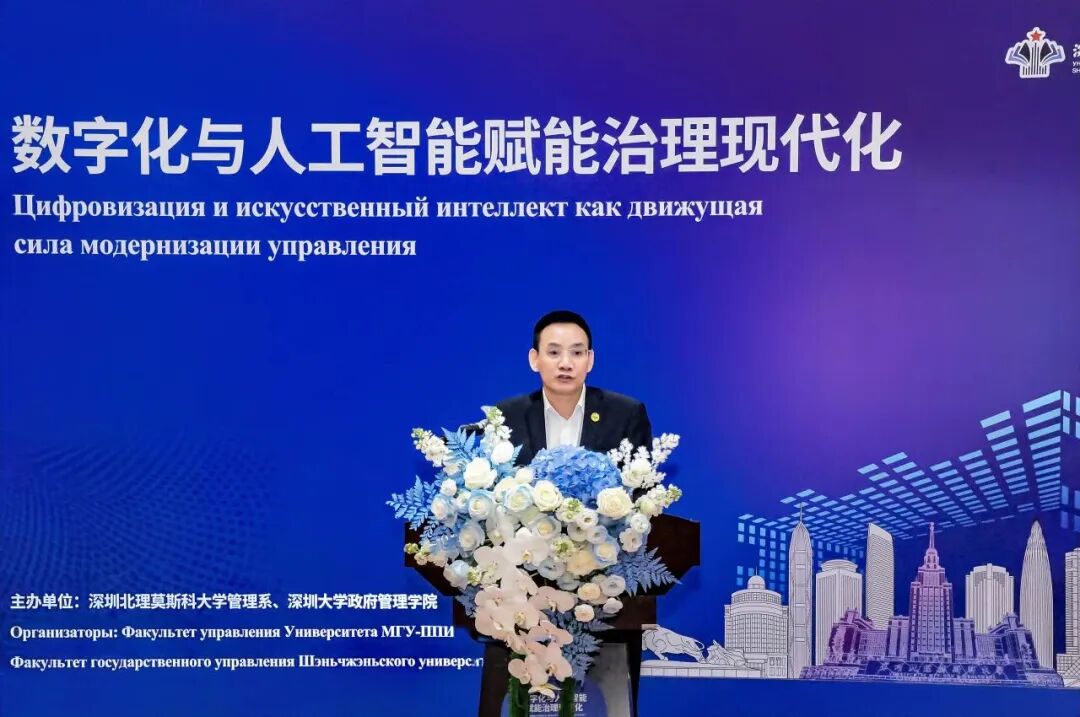
In his speech, Chen Chaofeng stated that in July this year, President Xi Jinping raised “four questions of our times” at the 2026 World Artificial Intelligence Conference and High-Level Meeting on Global AI Governance: When machines begin to think, how should humans coexist with them? When algorithms participate in decision-making, how can security be ensured? When technology challenges ethics, how can governance keep pace? When divides continue to widen, how can inclusiveness be achieved? These questions constitute a test of our times for governance researchers and educators. As a Sino-Russian cooperative university located in Shenzhen, a frontier of China's reform and opening-up, Shenzhen MSU-BIT University should contribute its unique insights to addressing these questions. He emphasized that the core of governance modernization lies in the coordination between people and institutions. It is necessary to recognize both the scientific and artistic dimensions of management and clarify the value and limits of artificial intelligence in empowering governance. Technology can facilitate process reengineering, but the human dimension of governance and value judgments will always remain the responsibility of people.
In his speech, Zhang Shuhua stated that the rapid evolution of artificial intelligence technology is profoundly transforming human society. The development of artificial intelligence should not be limited to securing technological leadership but should also adhere to the principle of using technology for good, enabling it to better serve economic development, improve people's well-being, and optimize national governance.
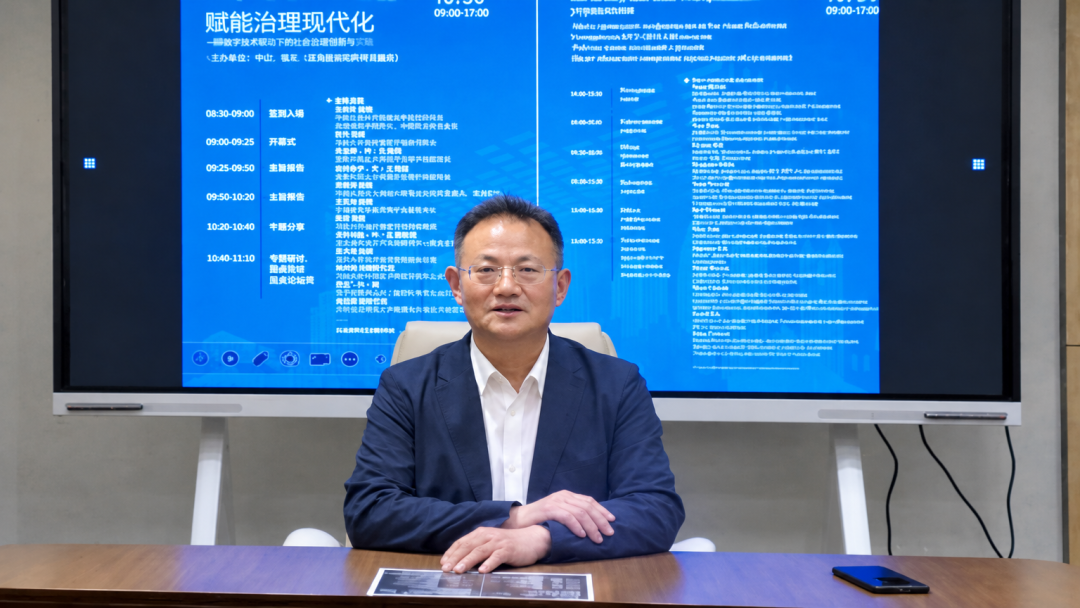
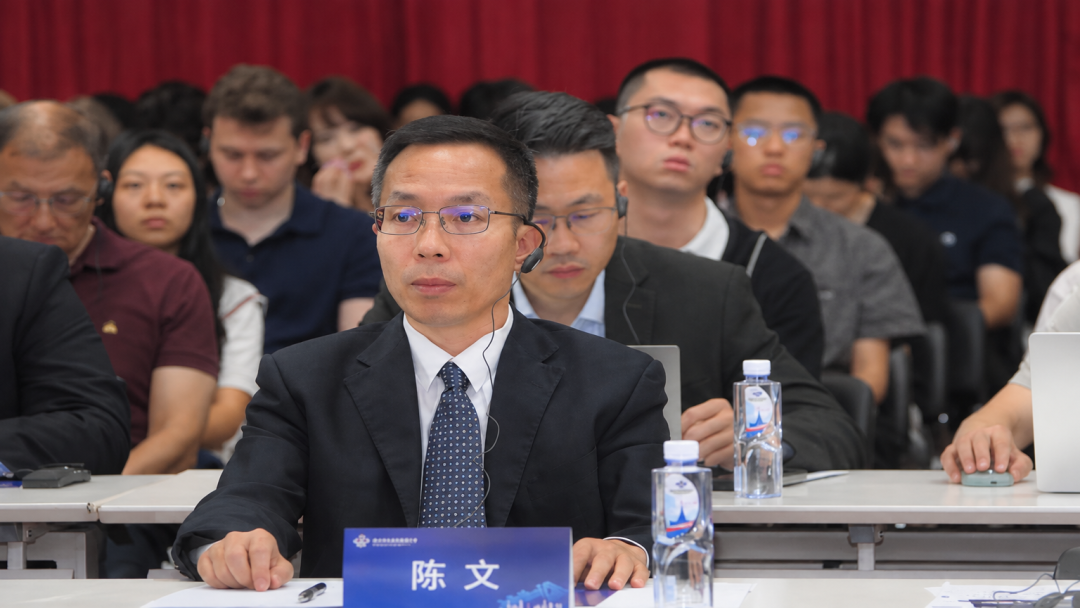
Chen Wen pointed out that the impact of digitalization and artificial intelligence on governance systems has gone far beyond improvements in efficiency at the instrumental level. These technologies are driving a shift in governance paradigms from experience-based judgment to data-driven decision-making, from passive responses to proactive anticipation, and from governance by a single administrative actor to collaborative governance involving multiple stakeholders. He emphasized that improvements in technological capabilities do not automatically translate into higher levels of governance. “The ultimate question that AI-driven governance transformation must answer is not ‘What can be done?’ but ‘What should be done?’” He also proposed deepening cooperation between Chinese and Russian universities in three areas: joint research, talent cultivation, and academic exchanges.
In her presentation titled “Digitalization and Artificial Intelligence: A New Logic of Governance in the Contemporary World,” Kudina proposed that digitalization has, for the first time, enabled humanity to manage both vertical hierarchical structures and horizontal network organizations simultaneously. Each of these two approaches is suited to different tasks, and their advantages lie in their combined application. She particularly pointed out that artificial intelligence handles routine tasks within individual stages, while the connections between these stages still depend on human involvement. “Value is created at the points of connection.” Goal setting, self-reflection, empathy, and non-algorithmic decision-making remain fundamental human “meta-capabilities.”

Focusing on the practices and comparative perspectives of digital governance in China and Russia, Professor Tang Lei, Deputy Dean of the School of Government at the Chinese Academy of Social Sciences, examined four cases: the People's Daily Online Message Board for Leaders, the Beijing 12345 Citizen Service Hotline, Shanghai's “One Network for Unified Management” platform, and Xiong'an's digital twin city. These cases illustrate a progressive exploration ranging from a nationwide channel for public opinion to the development of a new city of the future. He pointed out that the fundamental value underlying China's digital governance is putting people first, while the logic of governance advancement involves moving “from passively responding to public complaints to data-driven analysis, proactive early warning, and addressing problems at their source.” Professor Chen Tan of our school drew attention to the “Solow Paradox,” whereby substantial technological investment may be followed by a significant delay before improvements in governance effectiveness become apparent. Ekaterina Albertovna Balan, Deputy Director of the Office of the Presidential Commissioner for Children's Rights of the Russian Federation, shared Russia's experience with the federal project “Government Services for Citizens,” demonstrating practical approaches to integrating public services around “life situations” and improving the well-being of families and children through digital transformation.
Regarding the legal and ethical dimensions of artificial intelligence, Yuri Yuryevich Petrunin, Deputy Dean of the School of Public Administration at Lomonosov Moscow State University, proposed that the task of governance is not to prevent technological development but to manage its consequences. Soft ethical regulation offers flexibility but lacks binding force, while hard legislation provides accountability but can easily lag behind innovation. The real choice is therefore not a binary decision between “loose” and “strict” regulation, but continuous adjustment and calibration. Elena Nikolaevna Markova, Director of the Sino-Russian Comparative Research Center for Law at Shenzhen MSU-BIT University and Associate Professor at the Faculty of Law of Moscow State University, outlined four categories of risks: algorithmic “black boxes,” diffusion of responsibility, algorithmic discrimination, and data breaches. She also compared the Russian Federation's Federal Law “On Supporting the Development of Artificial Intelligence Technologies” with the relevant legislative processes in China, raising the challenge of the “problem of many hands” in assigning responsibility.
How universities should respond to the intelligent era was another focus of the forum. Zheng Chonghui, Member of the Party Committee and Executive Vice President of the Hangzhou Institute for Advanced Study at the University of Chinese Academy of Sciences, argued that AI for Science has entered its “second half.” The scope of university governance has expanded to encompass the entire “research and education” ecosystem, including platforms, data, models, interdisciplinary organizations, and industry collaboration. He also proposed three red lines: AI must not replace the selection and conceptualization of research topics, must not replace ethical judgments, and must not participate in degree-awarding votes. Wang Yunhai, Deputy Secretary-General of the Chinese Society for Strategies of Educational Development and Professor at the Center for Education and Open Economy Research at the University of International Business and Economics, pointed out that artificial intelligence is reshaping three fundamental structures of universities: knowledge production, authority certification, and organizational operations. Qin Guanying, Director of the International Department of the same center, used data to illustrate the global distribution of academic talent in artificial intelligence and its pattern of “one dominant power, one strong power, and multiple tiers.”
Focusing on talent cultivation and philosophical reflection, Professor Yuan Fangcheng of our school proposed that the cultivation of public governance professionals should shift from “knowledge transmission” to “capability development,” promoting differentiated training through a “2+3+X” model. Zhong Xiangyang, Distinguished Research Fellow at the China Center for Special Economic Zone Research at Shenzhen University, reviewed the development of artificial intelligence, emphasized the importance of philosophical reflection in scientific and technological decision-making based on historical experience, and offered perspectives on the prospects for Sino-Russian cooperation.
The forum also featured a roundtable discussion, during which participating scholars engaged in in-depth exchanges on issues including the boundaries of responsibility in human–machine collaboration, the coordination of rules for algorithmic governance, and curriculum restructuring for cultivating talent in the digital and intelligent era. At present, artificial intelligence is evolving from an auxiliary tool into a foundational factor, and the central question of governance has shifted from “whether we can create technology” to “whether we can effectively manage technology.” The forum placed academic issues within the broader trends of our times, combining theoretical analysis with comparisons of practical cases. Our school will continue to establish high-level academic platforms, promote joint research and talent cultivation in intelligent governance with the Department of Management at Shenzhen MSU-BIT University, and contribute the efforts of higher education institutions to building a fair and equitable global artificial intelligence governance system.
Layout | He Gengyi
First Review | Wang Yingying
Second Review | Luo Wenting
Final Review | Gu Zhijun