On the morning of May 29, 2026, an exchange meeting with the visiting faculty and students of the Department of Applied Social Sciences of The Hong Kong Polytechnic University was successfully held in Room B201 of the Shouzheng Building at the Lihu Campus of Shenzhen University. The two sides held in-depth exchanges on topics such as discipline development in social work, Shenzhen's experience in social work development, and practice in community services for older adults. The visiting group comprised Liu Tianyin and Cai Xinxin, Assistant Professors of the Department of Applied Social Sciences at PolyU, and 25 undergraduates majoring in Applied Gerontology and Service Management. Participants from Shenzhen University included Chi Shangxin, Associate Professor and Head of the Department of Sociology of the School of Government; Professor Li Xiaofeng; and representatives of master's and doctoral students majoring in social work.
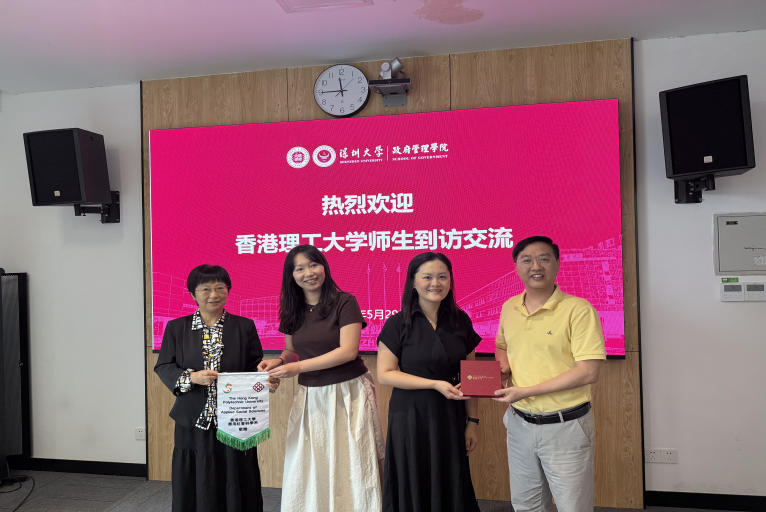
Speaking on behalf of the Department of Sociology of Shenzhen University, Mr. Chi Shangxin delivered a welcome address, noting that the exchange marked an important opportunity for the two universities to deepen cooperation and jointly promote professional development. He gave a brief overview of the development of the Department of Sociology at Shenzhen University: Founded in 1996, the department has been rooted in Shenzhen and served the Guangdong–Hong Kong–Macao Greater Bay Area, and has now established a complete training system covering the undergraduate program in sociology, the undergraduate micro-program in social work, and master's and doctoral programs. The social work program was approved at undergraduate level in 2004, as a master's professional degree authorization point in 2014, and as a doctoral program in 2024, steadily building a high-level talent cultivation chain from undergraduate to doctoral studies and becoming an important force in social work education and research in South China. Mr. Chi noted that Hong Kong, China, has long been a leading center of international social work development, with a mature professional system and rich experience. He expressed the hope that the two universities would forge closer ties in joint course development, faculty and student exchanges, and research cooperation, and looked forward to organizing faculty and students to visit PolyU for on-site learning, drawing on its advanced experience in applied gerontology, service management, and fieldwork supervision.
Ms. Liu Tianyin explained the purpose of the visit. As an important component of the students' "pre-internship" component, the visit was designed to help students, through field visits and interaction, gain a deeper understanding of the talent cultivation models of university programs related to social services in the Chinese mainland, the distinctive practical experience of social services in Shenzhen, and students' learning experiences in agency internships. Against the backdrop of integrated development in the Greater Bay Area, she said, she hoped the visit would broaden students' professional horizons and lay a solid foundation for their upcoming formal internships and their future careers in social services.
Mr. Chi Shangxin further introduced the overall development of the social work discipline at Shenzhen University. The discipline has built an integrated undergraduate–master's–doctoral training system. Relying on the locational advantages of the Guangdong–Hong Kong–Macao Greater Bay Area, it focuses on research areas such as social policy, grassroots governance, philanthropy, and social governance. With a well-structured faculty, outstanding research and policy-advisory achievements, and a well-developed university–society collaborative education mechanism, it has established multiple off-campus internship and practice bases, and its distinctive features and regional service advantages are clearly defined.
Taking the development of social work in Shenzhen as her starting point, Ms. Li Xiaofeng systematically traced four stages of the profession's evolution — institutional initiation, scaled-up quality improvement, high-quality upgrading, and the rebuilding of a localized "grand social work" system — and interpreted key measures such as top-level policy design, talent incentive schemes, and the expansion of service fields. She pointed out that social workers in Shenzhen have moved beyond traditional civil-affairs welfare services toward an all-domain service pattern integrating "welfare, governance, and development," and will further expand service fields, exporting Shenzhen's experience and localized paradigms for the coordinated development of social work in the Guangdong–Hong Kong–Macao Greater Bay Area.
In the session on students' internship and practice, two graduate student representatives gave presentations based on their frontline practice. Doctoral candidate Ye Fuyi, in a presentation entitled "Accompanying the 'Nanny-Type' Elderly Drifters in the Community: Fieldwork Practice and Reflections," shared her internship experience in Xingcheng Community, Dongguan. Focusing on the "nanny-type" elderly drifters — older people who relocate to care for their grandchildren — she analyzed in depth their predicaments of marginalized identity, social isolation, and the pressures of intergenerational caregiving. Using questionnaire surveys and in-depth interviews to precisely identify their needs, she designed and ran supportive art therapy groups featuring gentle approaches such as painting, music, and mindfulness dance movement, providing psychological companionship and emotional support. She also reviewed practical challenges such as difficulties in recruiting group members, older adults' biased perception of stress, and the management of group dynamics, and summarized coping experiences such as flexibly adjusting service schedules, introducing non-verbal art therapy, and gentle, tiered guidance. Master's candidate Qiu Wanxin has long specialized in gerontological social work and has taken part in a number of key livelihood projects such as "Fengyulan: Community Brain Health for Older Adults." She gave a detailed account of the full chain of practical services — community brain health screening, public education lectures, body-and-brain activation group courses, home-based self-help livestreamed classes, and the cultivation of professional volunteers — and explored the building of a dementia-friendly community service model linking "family, community, and community health institutions." Addressing practical difficulties such as older adults' strong sense of stigma, limited participation time, and large individual differences in capacity, she shared practical insights: designing activities with graded difficulty, respecting service users' autonomous choices, strengthening social connections, and attending to the recollection of life stories.
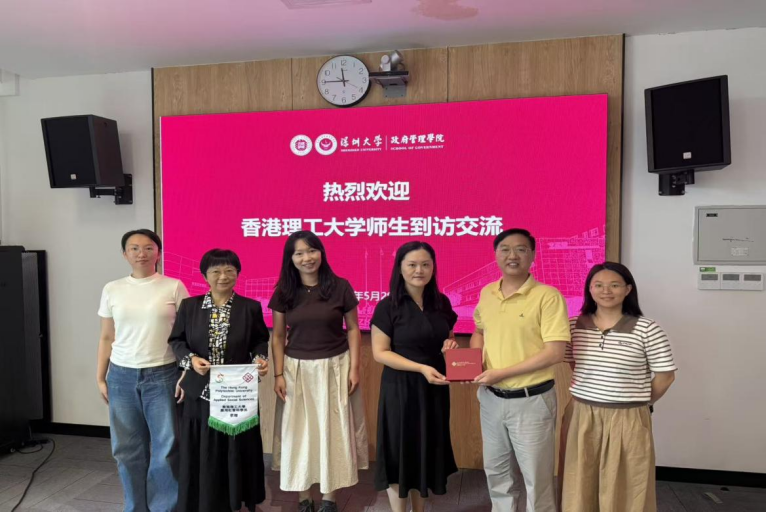
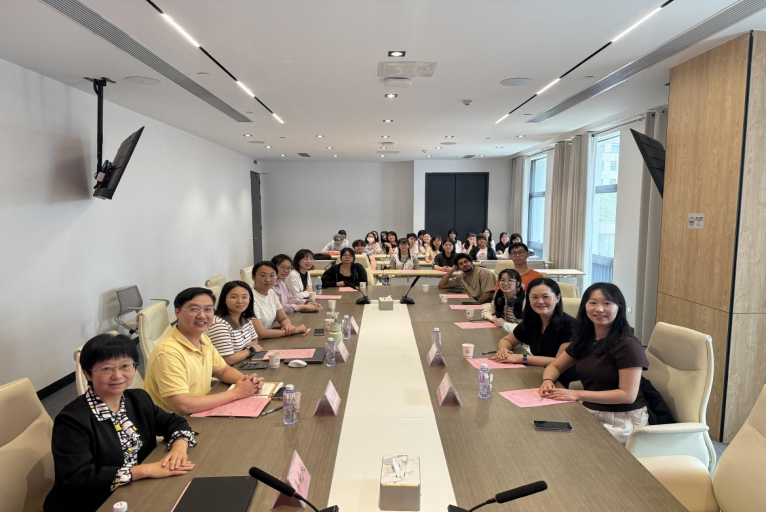
After the presentations, faculty and students from the two places held free-ranging exchanges on topics such as pathways of discipline development in social work, joint training of social work talents in the Greater Bay Area, innovative services in gerontological social work, models of professional internships, and the industry's development prospects, with lively discussion and a stimulating clash of views. Mr. Chi Shangxin expressed the hope of taking this opportunity to further deepen cooperation between the two universities in talent cultivation and scientific research.
After the meeting, Ye Fuyi and Qiu Wanxin led the visitors from PolyU on a tour of the Lihu Campus of Shenzhen University, offering a first-hand feel for the campus environment and educational atmosphere. Both sides agreed that the exchange had built a high-level platform for mutual learning among the social work programs of universities in Guangdong, Hong Kong, and Macao, deepening the understanding and ties between faculty and students of the two places in academic research, practical services, and talent cultivation. Going forward, the two sides will continue to draw on the advantages of the Greater Bay Area to carry out regular cooperation in academic seminars, faculty and student exchanges, and joint practice, working together to advance the high-quality development of the social work discipline and to cultivate more professional talents for grassroots social governance and public services.
Layout: He Gengyi
First Review: Chen Simiao
Second Review: Qi Tengfei, Chi Shangxin
Final Review: Gu Zhijun