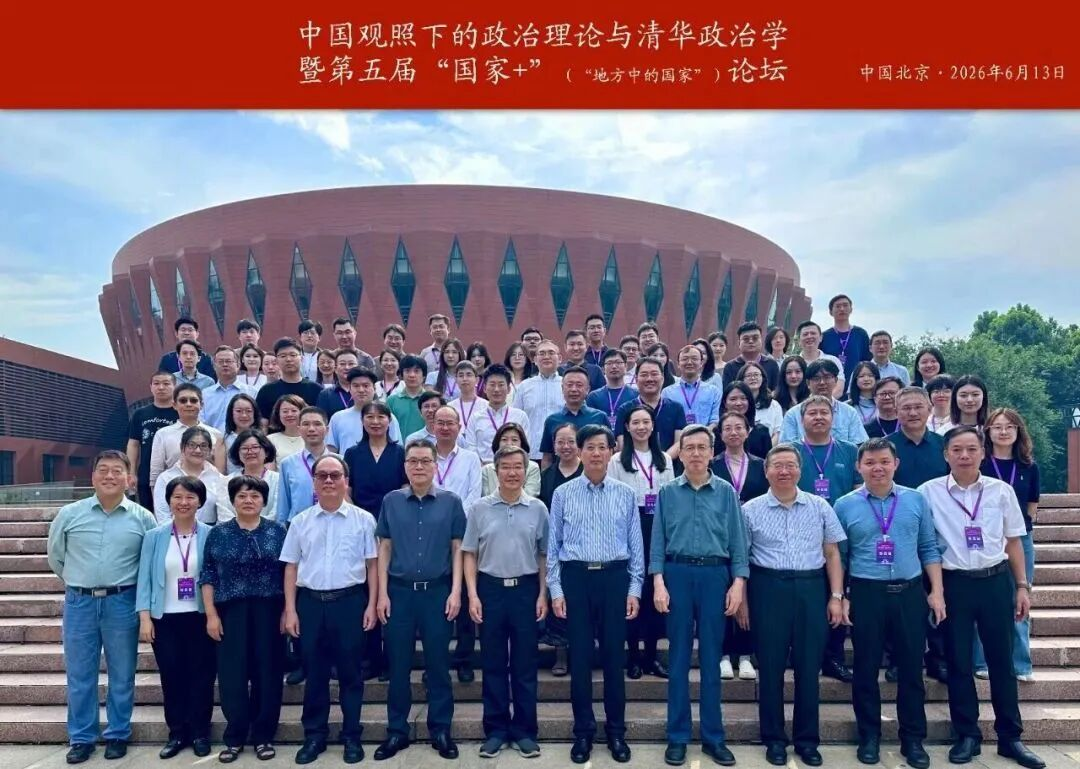
On June 13, 2026, the forum "Political Theory in Chinese Perspective and Political Science at Tsinghua," together with the Fifth "State+" Forum on the theme "The State in Localities," was successfully held at Tsinghua University. The forum was one of a series of events celebrating the centenary of political science at Tsinghua University, hosted by the Department of Political Science of Tsinghua University and the Center for Chinese Political Science of Peking University. Nearly one hundred scholars and students from universities and research institutions at home and abroad attended the forum, engaging in in-depth discussions around the theme "The State in Localities." Professor Yu Keping, Dean of the School of Government of Shenzhen University and Director of the Center for Chinese Political Science of Peking University, attended the forum and delivered opening remarks and a keynote speech; Research Fellow Ran Ran of the Department of Political Science participated in the thematic discussions of Panel III.
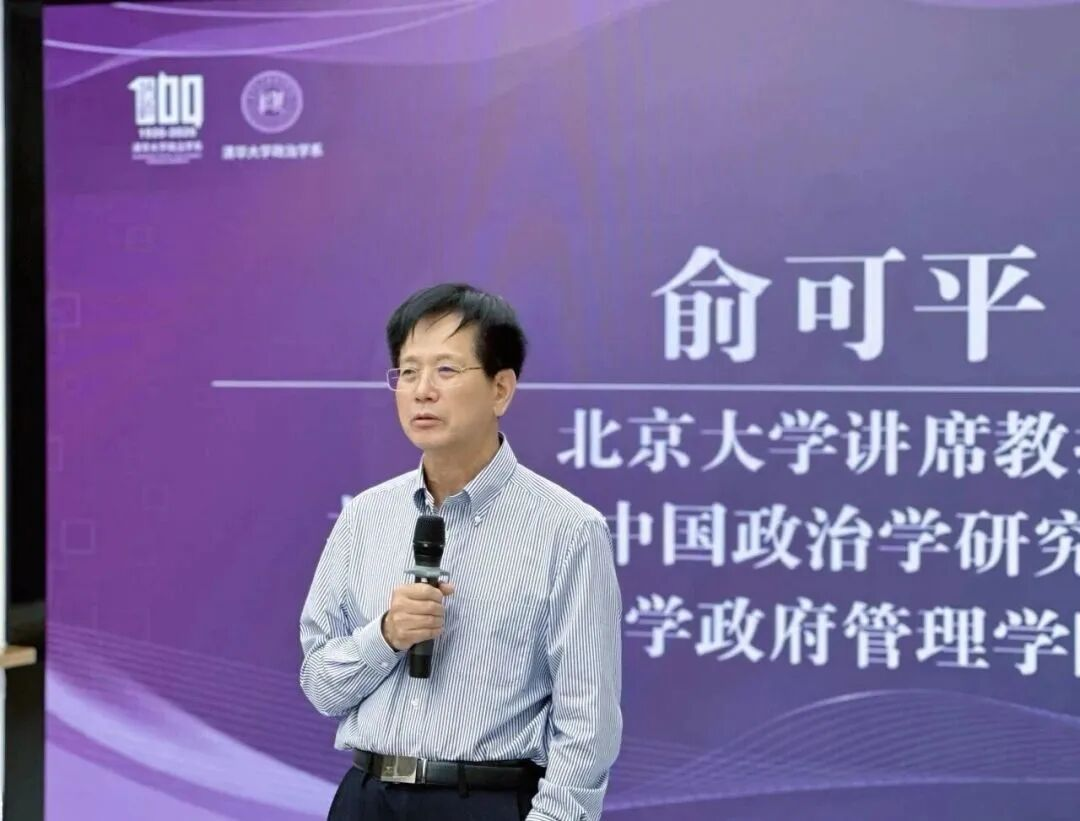
In his opening address, Professor Yu Keping reviewed the original intent and development of the "State+" Forum, noting that since its founding the forum has been committed to advancing basic research in political science, and stressed that under new historical conditions it is necessary to return to "the state" — one of the core propositions of political science. He stated that political science must both respond to real-world politics and uphold its character as a foundational discipline. The "State+" Forum aspires, around this core question of the state, to continually build a high-end exchange platform marked by originality, a sense of community, and academic vitality.
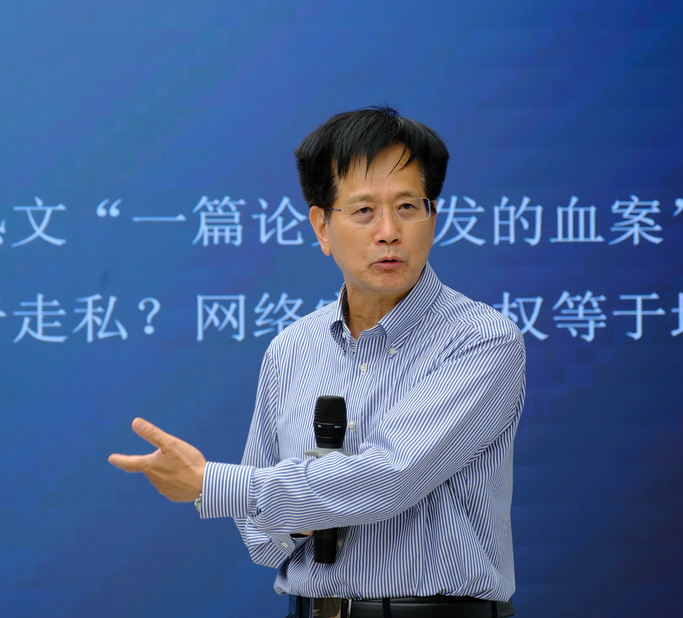
In the keynote session, Professor Yu Keping delivered a keynote speech entitled "The New Challenges of Digital Intelligence to State Sovereignty." He pointed out that globalization once posed a profound challenge to traditional state sovereignty, and that digital and intelligent technologies — especially the advent of the age of artificial intelligence — are having an even more far-reaching impact on state sovereignty. Algorithmic power, virtual space, cross-border data flows, digital currencies, online public opinion, and the development of artificial intelligence are reshaping the operational space and modes of action of state sovereignty. How to protect popular sovereignty, civil rights, and public values while encouraging technological innovation is a frontier question that political science must confront.
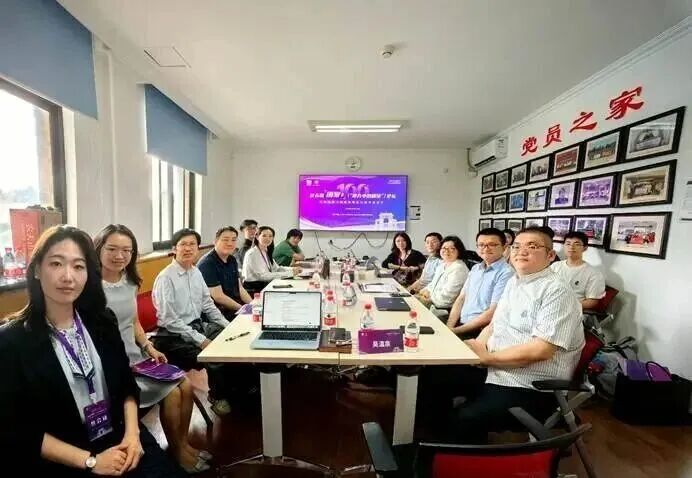
In the afternoon, four parallel panels were held concurrently in Mingzhai Building at Tsinghua University. Participating scholars held in-depth exchanges on themes such as "Faces of the State," "The State in Relations," and "The State in Adaptation," and a panel for master's and doctoral students was also convened. Overall, drawing on the perspectives of historical political science, the history of political thought, borderland governance, digital-intelligent governance, grassroots governance, central–local relations, state–society relations, and national identity, the panels further enriched the theoretical connotations and empirical layers of "the state in localities." In her panel, Research Fellow Ran Ran explored in depth how high state capacity and strict accountability prompt local officials to adopt blame-avoidance strategies.
The forum brought together experts and scholars from universities, research institutions, and academic publishers across the country. With theoretical guidance from senior scholars and active exploration by mid-career and young scholars as well as students, it displayed the vitality and continuity of China's political science academic community. The forum concluded successfully in a lively and substantive academic atmosphere. Participants look forward to taking the forum as a new starting point for continued in-depth exchanges on state theory and local governance practice, contributing more scholarly wisdom to building an autonomous knowledge system for Chinese political science.
Text and Images: WeChat account "Zhengzhixue Pingjie (Political Science Review)"
Layout: He Gengyi
First Review: Luo Wenting
Second Review: Yuan Chao
Final Review: Gu Zhijun